September 1, 2026
How to Start a Heating and Air Conditioning Business
Learn how to start a heating and air conditioning business in 2026, including licensing, startup costs, A2L rules, working capital, pricing, and customers.
Read More
Business

Creating a culture of safety should be a top priority for entrepreneurs planning to scale their startups into midsize operations. This massive undertaking entails building a brand that demonstrates a strong commitment to employee well-being.
Start with business safety infrastructure, including structural design choices, physical systems and operational protocols. This will attract top talent and retain indispensable members of your organization, reduce corporate liability and secure reduced insurance rates. Consider these strategies to make your leadership initiatives visible to key stakeholders.
📖 YOU MIGHT ALSO LIKE
Workplace safety culture begins outside. Treat your property’s landscape as a security asset rather than an aesthetic feature. Draw inspiration from the core principles of crime prevention through environmental design (CPTED), which include territorial reinforcement, natural surveillance, maintenance and natural access control.
Territorial reinforcement helps your employees feel a sense of ownership over their workplace and encourages them to exert positive influence over it to deter criminals.
Putting considerable thought into your landscape design matters to build a safety culture through CPTED. Tried-and-true practices include defining boundaries between your commercial property and public spaces through strategic placement of signage and illuminating all dark spots.
Moreover, defensive plants are useful for perimeter security. For instance, prickly hedges are strong physical barriers that signal the property is well protected and discourage trespassers, while sturdy trees can serve as bollards. Facility maintenance professionals can prune overgrown vegetation to ensure clear sightlines and keep walkways unobstructed, encouraging traffic to flow through intended routes.
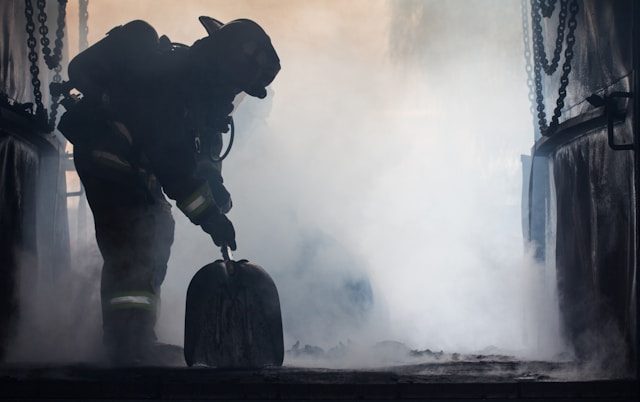
First responders can handle pressure under high-risk, high-stakes situations. However, on-site obstacles slow them down. The challenges firefighters, police officers, paramedics, EMTs and hazmat professionals face include visibility issues, elevator shutdowns and locked doors.
Poor crowd control can be a serious concern. Evacuating occupants impedes the movement of emergency personnel rushing to the scene. Stampedes may increase casualties, complicating an already distressing situation and potentially overwhelming the outnumbered responders with limited resources. Some energy-efficient buildings contain materials that block radio waves, rendering first responders' radios less effective and causing communication problems.
Using readable signs, installing adequate emergency lighting, displaying updated floor layouts and widening evacuation routes show that the management anticipated and prepared for the worst-case scenarios. So does using fail-safe door configurations and preventing exits from ever being blocked. These investments can also deliver measurable returns by reducing emergency response delays, lowering the risk of injury-related claims and demonstrating proactive risk management to insurers, employees and prospective hires.
Investing in an emergency responder radio coverage system indicates you want to ensure first responders can communicate clearly on your premises and do their jobs effectively. A professional with a general radiotelephone operator license can test your building and confirm if it has spots that block or weaken the strength of handheld radios. Failing the inspection may indicate the building needs an ERRC system or system upgrades, such as internal antennas, amplifiers or other components, to improve radio coverage and reduce dead zones.
An emergency action plan outlines what everyone should do during urgent situations. This written document spells out specific steps, reducing guesswork and promoting clarity amid the chaos and confusion.
Like all other employee safety programs, your emergency action plan should involve management participation, proper training and provision of essential equipment to encourage worker engagement.
A well-thought-out emergency action plan centers on workplace hazards assessment. Educate all stakeholders on how to identify different dangers, manage them and report to the authorities accordingly.
Run drills to bridge the gap between theoretical knowledge and practical experience. Reassess your safety protocols regularly to find areas for improvement and better your measures over time.

Photo by Toon Lambrechts on Unsplash
Providing a clean, hygienic workplace is low-hanging fruit. It’s a basic yet effective way of communicating that you care about employee health and wellness. Keeping things organized, clutter-free and spotless helps lower stress for everyone, especially for individuals who value preventive care and for people who are sensitive to germs.
Some businesses outsource janitorial and commercial cleaning to third parties to minimize the administrative burden and convert variable overhead into a fixed expense. These vendors recruit, employ and train facility maintenance professionals in the best cleaning practices and equip them with proper gear to do their jobs effectively, efficiently and safely.
Facility maintenance needs vary from industry to industry. Work with a janitorial and commercial cleaning service provider that specializes in your domain.
Finding the perfect fit is vital to reinforcing your safety culture and protecting building occupants from workplace hazards unique to your field, such as zoonotic allergens in life sciences and splintered wooden pallets in warehousing.
A safety culture is effective only when employees buy into it. Build on these strategies to launch successful employee safety programs and promote a health- and wellness-oriented workplace.
* This post is written in collaboration with our guest contributor, who has financially supported its publication.

Alex Quin is a full-stack marketing expert and global keynote speaker. Founder and Chief Marketing Officer of UADV Marketing - a member of the Forbes Agency Council.