
October 20, 2026
The 5 Best Software for Multi-Carrier Shipping Management
Compare 5 multi-carrier shipping management platforms, including ShipERP, ShipStation, Easyship, ProShip and Shippo, by carriers, automation and ERP fit.
Read More
Business

Most entrepreneurs swipe their personal credit card to cover business expenses and wonder why cash flow stays tight, and their FICO score keeps dropping. Sound familiar? You're running a real operation but funding it like a freelancer, and that gap is what holds the whole thing back.
Learning how to build business credit is the separation move that changes the math. Your business earns its own reputation, borrows in its own name, and carries its own weight. Bigger limits, better terms from vendors, and your personal FICO stays untouched when the business hits a slow month, or you need serious capital to scale.
Here's the realistic timeline: move smart, stay consistent, and you can build business credit fast within 6 to 12 months. Not next week, not 30 days. Real credit takes real reps.
This guide walks every step you need, from forming a legal entity and grabbing your EIN to opening tradelines, picking the right business credit card, and dodging mistakes that push most founders back a year. Building business credit is part of leveling up from side hustle to legit operator.
📖 YOU MIGHT ALSO LIKE
Business credit is armor. When clients pay slowly, or the market tightens, you borrow in your company's name instead of on a maxed-out personal card. Your personal FICO stays clean, your house and savings stay out of the line of fire, and you keep optionality.
A strong business credit score also unlocks doors that personal cards never open. Higher limits, better interest rates, net 30 terms and net-60 terms from suppliers, and lines of credit that give you breathing room to manage payroll, inventory, and growth without sweating cash flow every week.
Compare that to the founder running everything on a $15,000 personal Visa. One bad month, one client ghosts an invoice, and suddenly the APR is 24%, and the personal credit score drops 80 points overnight. That's a trap dressed up as a business.
There's a credibility layer too. Vendors, partners, landlords, and even enterprise customers pull your business credit report before deciding how to work with you. A strong profile signals you're the real deal. A blank file tells them you're still figuring it out.
Personal credit ties to your Social Security Number and lives in Experian, Equifax, and TransUnion consumer bureaus. Business credit ties to your EIN and lives in Dun and Bradstreet, Experian business credit files, and Equifax Business. Separate systems, separate scores, separate rules.
The upside of that separation: you can build both at the same time. A rough quarter in the business doesn't have to bleed into your personal credit report, and strong personal credit can still help when a lender asks for a personal guarantee. Two profiles, each needs its own attention.

Still operating as a sole proprietor? Your business doesn't really exist as a separate financial entity yet. Form an LLC or a Corporation. That filing creates the legal line between you and your company, and it's the exact line the business credit bureaus need before they'll recognize your business at all.
Once you're registered, get your EIN straight from the IRS website. It's free, it takes under 15 minutes, and it's the Social Security Number for your company. Every credit application, vendor account, and business bank account will ask for it. Your EIN business credit profile starts the moment this number exists, so treat it like the official launch of your EIN business credit journey.
Handle state registration, local licenses, and any permits your industry requires. Lenders actually check this. The Small Business Administration has solid guidance on formation basics. A clean, properly registered business looks legitimate on paper, and paper is what credit bureaus read.
Skip this step, and every credit move you make later sits on a cracked foundation. Do it right from day one, and you won't have to circle back to fix it.
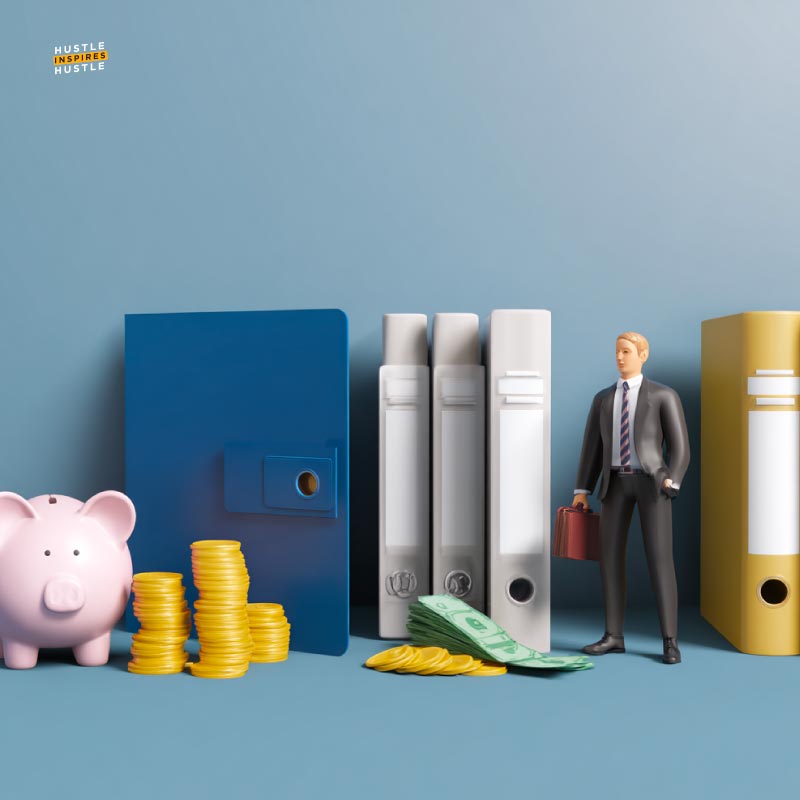
Open a dedicated business checking account with your EIN and your legal business name. Run every dollar of business income and every business expense through it. Nothing else.
That account becomes the financial receipt for your whole operation. Lenders read bank statements when they underwrite. Credit bureaus indirectly see the structure. And your accountant stops hating you at tax time.
Build a strong relationship with your bank. Keep healthy balances when possible, skip the overdrafts, and talk to a business banker about where they report data and what products fit your stage. Those relationships matter later when you apply for a line of credit or a small business credit facility.
Pro move: open a separate business savings account, too. Park reserves there for taxes and a rainy-day buffer. It shows discipline on statements and keeps you honest.
Pulling $400 out of the business account for groceries or running a family trip through the company card destroys the separation you worked to build. Legally, it can pierce your LLC protection. Financially, it makes your books unreadable. From a credit standpoint, it signals chaos.
Credit card issuers and commercial lenders read boundaries. Clean books tell them you manage money like an adult. Messy, co-mingled accounts tell them you're a risk, and they'll either deny you or bury you in higher rates.

Vendor credit is the fastest on-ramp into the business credit system. These are suppliers who extend net 30 terms or net-60 terms, letting you buy now and pay within 30 or 60 days. Office supply shops, shipping companies, web hosting providers, and uniform services are classic starters.
Here's the catch: vendor credit only builds your file when the vendor actually reports to one of the business credit bureaus. Ask before you sign up. Prioritize vendors that feed Dun and Bradstreet, Experian Business, or Equifax Business. No reporting means no tradeline, which means no progress.
Start small. Pay every invoice early when you can, and always on time. After a few months of clean payments, request higher credit limits or longer terms. That upgrade signals trust and bureaus' notice.
Aim for 3 to 5 active tradelines within your first six months. That's the base layer of a real credit profile, and it tells any lender pulling your file that your business meets obligations consistently. Tradelines are the heartbeat of the whole system.

A business credit card is one of the quickest accelerators for building business credit. Swipe it for expenses you already run (software, ads, gas, meetings), pay the balance in full each month, and every on-time payment hits your business credit report.
Not every card reports to the business bureaus. Some report only to personal credit, which defeats the purpose. Look up which bureaus each card reports to before you apply. Chase Ink, Capital One Spark, and American Express business cards report in different ways. Fintech options like Brex and Ramp underwrite differently, often relying on business bank balance and revenue rather than a personal FICO pull.
Use the card strategically. Keep utilization under 30% of the limit when possible, pay on time, and don't apply for five cards in the same week. Each hard inquiry is a small ding, and a stack of rejections reads ugly on a file.
Brand new business and can't qualify for a premium card yet? Start with a secured business credit card or an EIN-only card. The rewards won't be flashy, but the history it builds is what you're after. Think of this as pure business credit builder mode. One reliable card paired with clean vendor accounts is a complete business credit builder foundation on its own.
Head to dnb.com and request a free DUNS number. It's your business's unique identifier with Dun and Bradstreet, the biggest name in business credit bureaus. Without a DUNS number, a huge portion of your credit file effectively doesn't exist.
Once you have it, pull your reports from all three bureaus regularly. Dun and Bradstreet, Experian Business, and Equifax Business each track slightly different data, and each one matters when you're applying for capital. Tools like Nav can consolidate monitoring in one dashboard. The Experian business credit team also offers its own tracking tools worth knowing about.
A quick guide to the scores you'll see:
Flag errors fast. Missing tradelines, accounts reporting late when they weren't, misspelled business names; any of it chips away at your business credit score. Dispute issues in writing and keep records. You're building a financial resume, so treat it like one.
Building business credit is a long game that pays hard. Better funding access, protected personal assets, cheaper capital, real credibility with vendors and partners. That's the payoff when you learn how to build business credit the right way and stay consistent.
Run the steps in order and don't skip any of them. Legal entity and EIN first. Business bank account with clean separation next. Vendor tradelines after that. A business credit card once you have some history. DUNS number and ongoing monitoring throughout. Each step stacks on the one before it and keeps stacking.
Start now, not when you need the money. Capital is easiest to secure when you don't desperately need it, and the only way to get into that position is to establish business credit before the pressure hits. For tactical tools every founder should be using, explore our business tools for entrepreneurs guide. Want deeper context on why financial literacy is the foundation of real wealth? Check out our conversation with Herman Dolce Jr. of Bella Sloan Enterprises for the mindset work that pairs with the mechanics.
Real operators establish business credit early and run it like a discipline. Your move.
Building business credit usually takes 6 to 12 months to establish a solid profile. You can see initial results in 30 to 90 days once you form the entity, get your EIN, open vendor accounts, and make on-time payments. A strong, established history across multiple tradelines generally takes 12 months.
Business credit is separate from personal credit and uses your EIN instead of your SSN. Start with vendor accounts that don't check personal credit, then move to secured business credit cards or fintech options that evaluate business performance rather than personal FICO. Keep finances fully separated and focus on consistent on-time payments to grow your file independently.
Profitability isn't required to start. You do need a legally formed entity, an EIN, and a business bank account. Many vendors extend starter net-30 terms to new businesses, and several business credit cards evaluate cash flow and revenue rather than profit. Focus on meeting obligations on time.
Business credit is tied to your business entity and EIN, while personal credit is tied to you as an individual through your Social Security Number. Business credit is reported to Dun and Bradstreet, Experian Business, and Equifax Business. Personal credit lives in Experian, Equifax, and TransUnion consumer bureaus.


Alex Quin is a full-stack marketing expert and global keynote speaker. Founder and Chief Marketing Officer of UADV Marketing - a member of the Forbes Agency Council.